China’s solar systems can look impressive on a showroom roof, yet daily performance depends on details that are easy to miss. A panel may produce less power than expected when rooftop shade, dust, or high temperatures reduce output. An inverter can also become a weak link, especially if its capacity does not match the array. And a battery? It may not provide the backup time a household expects.
So, what are common problems with solar systems? The answer often involves mismatched components, unclear performance estimates, installation defects, or limited after-sales support. These issues are not unique to Chinese products, but buyers comparing China-made systems should check model specifications, warranties, certifications, and service arrangements carefully. Ask how the system performs in your climate, not only under ideal test conditions. Request written estimates for energy production and battery runtime. Small details matter.
Solar engineer Maya Chen, a composite industry voice for this introduction rather than a quoted real-world authority, offers this practical reminder: “A solar system is only as dependable as its design, installation, and support.” Treat that as a checklist, not a guarantee. Even a well-designed system can underperform if roof orientation or shading was assessed poorly. This guide examines common faults, explains what warning signs to look for, and outlines questions to ask before buying. One caveat remains: product quality varies by manufacturer and model, so broad claims about an entire country’s solar systems can be misleading.
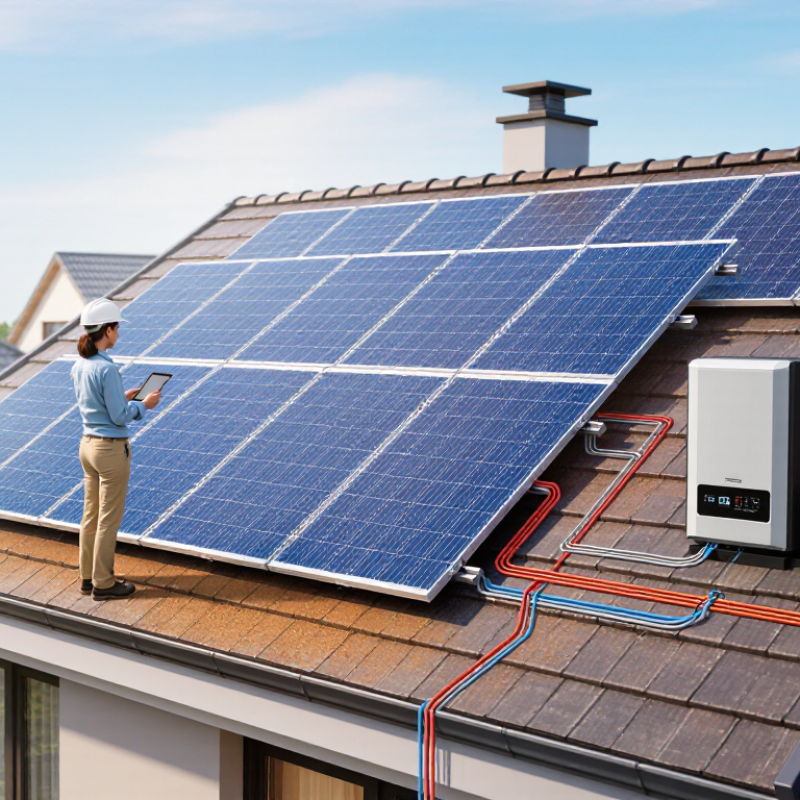
China’s solar industry supplies more than 80% of global photovoltaic manufacturing, according to the IEA. This scale lowers costs, but it also creates uneven quality across factories and product batches. A low price does not always indicate poor performance. However, rushed production, weak process control, or unclear component sourcing can cause early power loss.
Common problems include microcracks, poor soldering, delamination, and fragile junction boxes. These defects may appear after transport, heat cycles, or heavy rain. I have seen systems produce acceptable readings during commissioning, then lose output months later. That assumption was too simple. Installation quality matters just as much as panel manufacturing. Poor cable routing, shaded surfaces, and loose connectors can reduce an otherwise strong system.
Tips: Request independent test reports, serial-number traceability, and clear warranty terms. Check factory quality records, not only marketing claims. Inspect packaging for crushed corners or moisture damage. Use an installer who records voltage, insulation, and operating temperature during commissioning. Certification helps, but it is not a complete guarantee. Local climate testing is still necessary.
| Risk Area | Relevant Data or Benchmark | Common Problem in Solar Systems | Possible Field Impact | Risk Level | Recommended Control |
|---|---|---|---|---|---|
| Manufacturing concentration | More than 80% of global PV manufacturing capacity has been concentrated in China across major parts of the supply chain, according to IEA analyses. | High dependence on a single manufacturing region can increase exposure to production disruptions, rapid process changes, and inconsistent supplier oversight. | Longer replacement lead times, limited sourcing flexibility, and greater difficulty verifying how a product was manufactured. | High systemic risk | Use multi-source procurement, maintain serial-number traceability, and require independent factory and product audits. |
| Rapid price and capacity pressure | Global PV manufacturing capacity has expanded faster than annual deployment in recent years, contributing to intense price competition and industry overcapacity. | Cost reductions may encourage thinner materials, lower-cost encapsulants, reduced inspection, or substitution of components without clear disclosure. | Higher probability of early degradation, warranty disputes, and inconsistent performance between production batches. | High | Specify bill-of-materials controls, approve engineering changes in writing, and test samples from each shipment batch. |
| Supply-chain traceability | PV products typically pass through several stages, including polysilicon, wafers, cells, modules, logistics, and installation. | Incomplete chain-of-custody records can make it difficult to verify material origin, factory location, production date, and compliance documentation. | Customs delays, project interruptions, legal exposure, and inability to identify affected batches during a defect investigation. | High | Require batch-level records, immutable serial-number mapping, supplier declarations, and independent document verification. |
| Microcracks and cell damage | Electroluminescence inspection is widely used because visual inspection alone cannot reliably reveal hidden cell cracks. | Cracks may be introduced during cell handling, lamination, transport, installation, or thermal cycling. | Inactive cell areas, localized heating, lower energy yield, and possible progression of damage over time. | Medium to high | Perform pre-shipment and post-installation electroluminescence testing, use controlled handling, and record module locations. |
| Potential-induced degradation | PID is a recognized module reliability failure mode associated with high system voltage, humidity, temperature, and material interactions. | Insufficient PID resistance or unsuitable system grounding can cause power loss after prolonged operation. | Gradual reduction in output, string imbalance, and additional maintenance or module replacement. | Medium | Request PID test results based on applicable IEC procedures and verify module, inverter, grounding, and climate compatibility. |
| Hot spots and bypass-diode faults | Hot spots can result from partial shading, cracked cells, poor soldering, mismatch, or defective bypass-diode components. | Localized overheating may not be visible during commissioning unless thermal imaging or electrical diagnostics are performed. | Energy loss, accelerated encapsulant damage, connector heating, and in severe cases a fire hazard. | High where defects are undetected | Use infrared thermography under suitable irradiance, verify bypass-diode performance, and avoid shading during system design. |
| Encapsulant and backsheet aging | Long-term reliability depends on resistance to ultraviolet exposure, moisture, heat, and repeated thermal cycling. | Discoloration, delamination, cracking, or moisture ingress may occur when material selection or lamination control is inadequate. | Lower light transmission, insulation problems, corrosion, and reduced service life. | Medium | Require damp-heat, humidity-freeze, UV, and thermal-cycle evidence from accredited testing laboratories. |
| Connector incompatibility | PV connectors that appear similar are not automatically electrically or mechanically compatible unless they are approved as a matched system. | Mixing connectors from different specifications can create loose contacts, increased resistance, and water-ingress points. | Intermittent faults, overheating, arcing, and possible fire risk at connection points. | High | Use one approved connector system, prohibit unauthorized mating, and inspect crimp quality and torque during installation. |
| Certification and test-quality gaps | IEC certification confirms compliance with defined test requirements; it does not guarantee identical real-world durability for every batch or climate. | Certificates may be outdated, incomplete, or unrelated to the exact model, factory, or bill of materials delivered. | False confidence during procurement and weaker legal position when a field failure occurs. | Medium | Check model numbers, factory addresses, certificate validity, accredited laboratory reports, and production-batch consistency. |
| Performance-degradation uncertainty | Module warranties commonly distinguish between an initial power tolerance and a long-term degradation limit; warranty terms vary by product and contract. | Nominal warranty percentages may not cover workmanship, transport damage, installation errors, or losses that are difficult to prove. | Actual energy yield may fall below the financial model even when the module remains technically operational. | Medium | Use independent power testing, establish acceptance thresholds, monitor performance ratios, and define enforceable warranty procedures. |
| Recycling and end-of-life planning | IRENA and IEA-PVPS have projected tens of millions of tonnes of cumulative PV panel waste globally by 2050 under regular-loss scenarios. | Large deployment volumes can create future recycling, transport, and hazardous-material handling requirements. | Higher lifecycle costs and environmental liabilities if panels, cables, and electronic equipment are not tracked for recovery. | Medium, long term | Include take-back or recycling provisions, maintain asset inventories, and select materials and installers with documented recovery routes. |
It can expose weak solder joints, cell cracks, delamination, and material degradation. Thermal cycling is especially useful. It is not a lifetime guarantee.
Repeated heating and cooling stress solder connections and metal parts. Weak joints may fail after many cycles. Small defects can grow quietly.
Damp heat tests challenge encapsulants, backsheets, and corrosion resistance. Humidity-freeze tests reveal moisture paths and expansion damage. Results are useful, but never perfect.
Mechanical loads simulate snow, wind, and mounting pressure. Hail testing strikes the glass with ice balls. Hidden cracks may remain after impact.
It examines insulation, grounding paths, spacing, exposed conductive parts, and abnormal electrical conditions. It also considers fire-related construction risks. Installation still matters.
Yes. Shipping impacts, poor clamps, bad wiring, and unusual weather can create later failures. One overlooked connector may matter more than a visible glass mark.
Electroluminescence imaging can reveal hairline cell cracks. Inspectors should review test reports, serial records, factory controls, and field photographs. I would not trust one image alone.
Dust forms a gray film, especially near roads, farms, and construction. Light rain can make it stick. Shade from branches or walls may limit a whole string.
No. Cleaning should match local dust conditions and production data. Excessive cleaning wastes water and may scratch glass. The schedule may need revision.
Module power commonly falls about 0.3% to 0.5% for each degree above rated temperature. Airflow underneath helps. Tight mounting can trap roof heat. The estimate is useful, but site measurements are better.
What are common problems with solar systems? The main concerns often relate to manufacturing consistency, installation conditions, and long-term maintenance. Because China supplies more than 80% of the world’s photovoltaic products, large-scale production can create quality variation between components and batches. Testing under IEC 61215 and IEC 61730 helps identify issues such as power loss, insulation failure, hot spots, moisture penetration, and mechanical weakness, but testing cannot prevent every field problem.
Environmental conditions also have a major effect on performance. Dust, partial shade, high temperatures, and poor ventilation can reduce energy output even when the system is correctly designed. Annual module degradation, often estimated around 0.5%, gradually lowers production over time. In addition, inverters may have shorter service lives than modules, while limited technical support, slow replacement procedures, and weak after-sales communication can increase downtime and ownership costs. Careful supplier evaluation, professional installation, monitoring, and a clear maintenance plan can reduce these risks.

 Smart Energy