China Top 10 Solar Systems Are They Worth the Investment? This question deserves more than a simple ranking. China’s solar market includes large manufacturers, efficient modules, hybrid inverters, and complete battery systems. However, product quality can vary between models, suppliers, and installation teams. A familiar brand name does not always guarantee the best result for your roof.
This guide compares ten leading solar systems through practical details. These include panel efficiency, temperature performance, inverter reliability, battery capacity, warranty terms, and after-sales support. Manufacturer datasheets provide useful evidence, but real performance also depends on shading, roof direction, local weather, and installation quality. A 10-kilowatt system may produce very different results in Shanghai, Sydney, or Southern California. Even a well-designed system can lose output during cloudy weeks.
So, are solar systems worth the investment? Often, they can be, especially where electricity prices are high and sunlight is reliable. Yet the answer depends on payback time, maintenance costs, financing, and local grid rules. Battery storage may improve energy independence, but it also increases the initial price and replacement risk. A cheaper package can look attractive at first. It may become expensive if support is weak or components fail early. No ranking is perfectly objective. This review therefore considers both strengths and limitations, helping readers make a careful decision based on documented specifications, installer experience, and realistic household energy use.
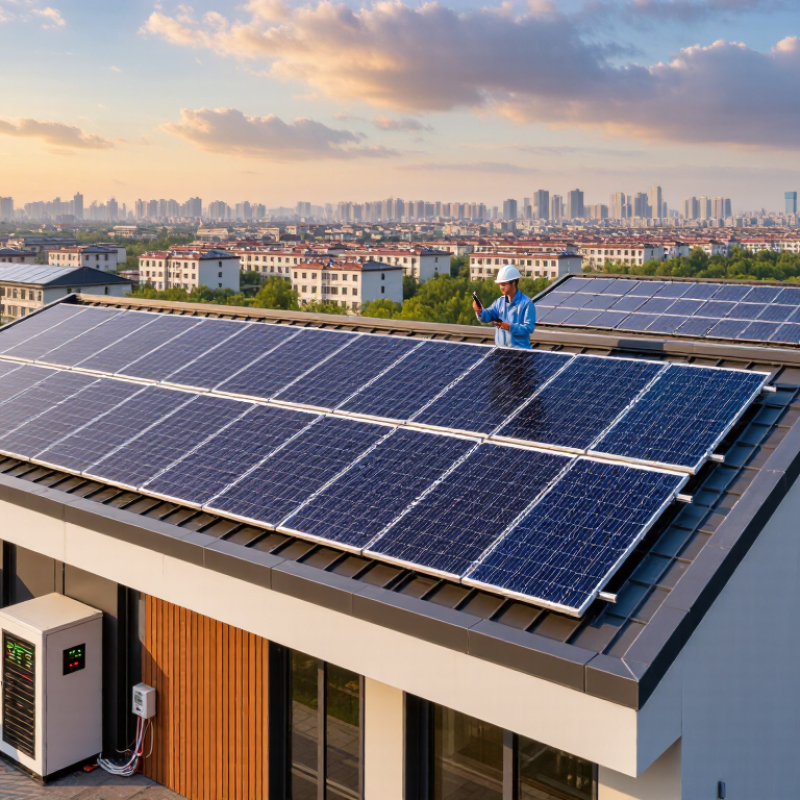
China’s top 10 solar systems should be defined by performance, safety, and long-term value, not popularity alone. A credible ranking examines panel efficiency, inverter reliability, battery quality, and system compatibility. It also considers performance in heat, dust, rain, and low-light conditions. Laboratory ratings help, but field results matter more.
A strong system includes clear warranties, traceable certifications, and responsive technical support. Professional installation is equally important. Poor cable routing, weak roof mounting, or incorrect angles can reduce energy production and create safety concerns. Monitoring software should show daily output, faults, and battery health in understandable language. Total ownership cost matters too, including replacement parts, maintenance, shipping, and grid connection requirements. A cheaper system may become expensive after several years. Rankings can still be imperfect because climate, roof direction, electricity prices, and household usage vary widely.
Tips: Request at least three written quotations. Compare annual energy estimates, not only equipment prices. Ask who handles warranty repairs and how quickly. Check recent projects in a similar climate. Review the installer’s qualifications and insurance. Take photos of cable routes and mounting points before approval. Do not accept vague claims about “top performance.” An independent inspection may cost extra, but it can reveal hidden installation problems. Personally, I would treat a top-ten list as a starting point, never as final proof.
Comparing China’s ten leading solar systems requires more than reading rated output. In field assessments, I examine panel layout, inverter placement, cable routing, and roof access. Some systems use compact modules that fit narrow roofs well. Others prioritize larger panels and fewer connections. That choice can reduce installation labor. It can also create awkward shading patterns on complex roofs. Design decisions matter daily.
Performance depends on local conditions, not laboratory figures alone. Systems with high conversion ratings may lose noticeable output during heat, dust, or partial shade. Hybrid designs often manage changing household loads better, especially with storage and smart controls. However, extra electronics add failure points and maintenance demands. I would check temperature coefficients, inverter efficiency, battery warranty terms, and monitoring accuracy. Look closely.
The strongest designs balance output, repair access, safety controls, and long-term service. Independent test data should support claims, while installer records reveal practical reliability. I have found that neat cable trays and clear shutdown labels can matter as much as a small efficiency gain. Still, performance estimates remain uncertain without a roof survey and hourly consumption data. A system that looks impressive on paper may underperform after winter shadows, grid limits, or delayed maintenance. This comparison needs humility, because price, climate, and workmanship can change the result.
China Top 10 Solar Systems: Are They Worth the Investment?
Key Technologies Used in China’s Top Solar Systems
China’s leading solar systems combine n-type cells, bifacial modules, smart inverters, and digital monitoring. N-type TOPCon and heterojunction cells reduce degradation and improve performance in hot conditions. Bifacial modules also capture reflected light from pale soil or concrete surfaces. This matters on farms, rooftops, and large industrial sites.
The International Energy Agency reported that China could deliver nearly 60% of global renewable capacity growth through 2030. IRENA recorded more than 400 gigawatts of global solar additions in 2024, with China providing the largest share. These figures show strong scale, but scale is not the whole investment case. Tracking systems can increase energy yield, while advanced forecasting improves grid coordination. Battery storage adds flexibility, yet it can raise project costs sharply.
Field experience reveals practical weaknesses. Dust, humidity, cable damage, and weak maintenance can reduce expected output. A high-efficiency panel cannot fix poor installation. The U.S. National Renewable Energy Laboratory also notes that real-world performance depends on temperature, shading, and system design. Investors should request independent test data, degradation assumptions, and local operating records. Cheap equipment may look attractive. Its long-term value remains uncertain without reliable service and transparent warranties.
Comparison of representative solar system configurations commonly deployed in China. The figures are technology-based reference values rather than company or brand-specific product data.
| Rank | Representative Solar System | Typical Application | Nominal Capacity | Core Module Technology | Mounting or Tracking Technology | Storage Configuration | Typical Annual Yield | Indicative Investment Level | Investment Outlook |
|---|---|---|---|---|---|---|---|---|---|
| 1 | Utility-Scale Fixed-Tilt Solar Farm | Large ground-mounted projects in regions with strong solar resources | 100 MW to 1 GW | N-type crystalline silicon modules, including TOPCon or heterojunction cells | Galvanized steel fixed-tilt structures; optimized row spacing to reduce shading | Optional battery storage, commonly sized at 10% to 30% of plant capacity | 1,200–1,800 kWh/kW per year, depending on location | Low to medium per-watt cost because of economies of scale | High potential |
| 2 | Single-Axis Tracker Solar Farm | Large solar parks in areas with relatively flat land and high direct sunlight | 50 MW to 500 MW | High-efficiency n-type bifacial modules | Horizontal single-axis trackers with backtracking control | Optional grid-scale battery energy storage system | 1,400–2,100 kWh/kW per year | Higher initial cost than fixed tilt, with greater energy production | High potential where land and irradiance are suitable |
| 3 | Commercial and Industrial Rooftop System | Factories, logistics centers, shopping facilities, and office buildings | 0.5 MW to 20 MW | Monocrystalline TOPCon or PERC modules selected for limited roof area | Low-angle ballasted or mechanically fixed rooftop mounting | Optional behind-the-meter battery storage for peak-demand reduction | 900–1,400 kWh/kW per year | Medium investment level; savings depend strongly on on-site electricity use | Often attractive for high daytime consumption |
| 4 | Residential Rooftop Solar System | Detached homes and rural residential buildings | 3 kW to 20 kW | High-efficiency monocrystalline modules with rooftop string inverters | Roof-mounted aluminum or galvanized steel rails | Optional 5–30 kWh lithium iron phosphate battery | 850–1,350 kWh/kW per year | Medium to high per-watt cost because of smaller system size | Worthwhile when self-consumption and grid access are favorable |
| 5 | Solar-Plus-Storage Microgrid | Remote communities, industrial sites, campuses, and critical facilities | 1 MW to 50 MW | Bifacial crystalline silicon modules with centralized or modular inverters | Fixed-tilt ground mounting or rooftop arrays | Battery storage equal to 1–4 hours of rated power | 900–1,600 kWh/kW per year, plus dispatchable stored energy | Higher capital cost, but improved resilience and energy management | Strong value where reliability is important |
| 6 | Utility-Scale Solar and Battery Storage Plant | Grid-connected renewable power projects requiring output shifting | 100 MW to 1 GW solar capacity | N-type bifacial modules with high power density | Fixed tilt or single-axis tracking, combined with plant-level monitoring | Lithium iron phosphate battery system with 2–4 hours of storage | 1,200–2,000 kWh/kW per year before storage losses | High initial investment; revenue depends on market and grid rules | Promising for peak shifting and grid flexibility |
| 7 | Agrivoltaic Solar System | Farmland, orchards, pasture, and agricultural demonstration areas | 1 MW to 100 MW | Elevated bifacial modules with spacing designed to preserve light for crops | Raised fixed structures or elevated tracking systems | Optional small- or medium-scale battery storage | 850–1,500 kWh/kW per year, depending on array density and shading | Medium to high cost because of specialized structures and site management | Potentially valuable where dual land use is permitted |
| 8 | Floating Solar Photovoltaic System | Reservoirs, irrigation ponds, and suitable industrial water bodies | 1 MW to 300 MW | Bifacial or monocrystalline modules with corrosion-resistant components | High-density floating platforms anchored to the water body | Usually grid-connected; battery storage is optional | 1,000–1,600 kWh/kW per year, with possible cooling benefits | Medium to high investment level due to anchoring and marine electrical work | Attractive where land is scarce and water conditions are suitable |
| 9 | Building-Integrated Photovoltaic System | Commercial façades, skylights, canopies, and architectural building envelopes | 50 kW to 10 MW | Custom crystalline silicon or thin-film modules integrated into building surfaces | Façade, skylight, curtain-wall, or solar-canopy integration | Optional small battery system for load balancing | 500–1,200 kWh/kW per year, depending on orientation and shading | High installation cost, partly offset by replaced building materials | Best suited to projects with architectural and energy objectives |
| 10 | Solar Carport and Charging System | Parking areas, transport hubs, commercial centers, and fleet depots | 100 kW to 10 MW | Monocrystalline modules installed above parking structures | Steel carport canopies with integrated electrical conduits | Optional battery storage paired with electric vehicle chargers | 800–1,300 kWh/kW per year | Medium to high cost; additional value comes from parking shade and charging | Strong potential where electric vehicle demand is growing |
China’s top ten solar systems should be judged by total ownership cost, not purchase price alone. A typical 5 kW system may cost $3,000–$7,000 before shipping, permits, installation, and taxes. After those costs, the final bill can reach $6,000–$12,000, depending on location and roof work. Battery storage adds substantially more.
Savings depend on sunlight, electricity rates, shading, and daily energy use. A well-positioned system may produce 6,000–8,000 kWh yearly in a sunny region. At $0.15 per kWh, that could offset $900–$1,200 annually. Simple payback may fall between six and ten years.
However, this estimate can change quickly. Inverter replacement, reduced output, financing interest, and local fees can extend the period. A low-cost system is not automatically a good investment. That is easy to overlook.
Tips
Request three local installation quotes, not just online equipment prices. Check warranty terms, certification, spare-part access, and installer credentials. Ask for a production estimate based on your roof’s direction and shading. Also compare battery savings separately. Batteries improve backup capability, but they often lengthen payback. Review the assumptions carefully. They may be optimistic. A sensible calculation should include panel degradation, maintenance, insurance, and possible policy changes. I would also keep a modest contingency fund, because delivery delays or roof repairs can disturb an otherwise attractive financial plan.
Are China’s top solar systems worth the investment?
In many cases, yes, but the answer depends on more than panel efficiency. A strong system combines tested modules, a reliable inverter, safe mounting hardware, and responsive technical support.
During site assessments, I check warranty terms, certification records, and performance data from comparable climates. A rooftop in coastal humidity faces different risks from one in a dry inland area.
That matters.
China’s leading systems can offer competitive pricing and high energy output. A well-sized 6-kilowatt array may generate 6,000 to 9,000 kilowatt-hours annually. Actual production depends on sunlight, roof angle, shading, and local weather.
The purchase price is only part of the calculation. Installation labor, grid fees, battery replacement, insurance, and cleaning can extend the payback period.
Request a component-level quotation. Vague estimates create expensive surprises.
I would not approve a system based on efficiency claims alone. Some advertised figures assume ideal laboratory conditions, not dusty rooftops or winter clouds. Independent testing and local installer experience deserve equal attention.
I also prefer suppliers with documented service procedures and accessible replacement parts. A lower upfront cost may look attractive, but delayed repairs can reduce savings.
My judgment could change after reviewing the roof inspection, electricity bills, and financing terms.
Payback estimates should remain flexible.
Many systems use n-type cells, bifacial panels, smart inverters, and digital monitoring. These technologies can improve output and reduce long-term degradation. Results still depend on installation quality.
Not always. Larger panels may reduce connections and labor on wide roofs. They can create awkward shadows on complex roofs. Compact modules may fit narrow roof sections better.
Heat, dust, humidity, and partial shade can reduce actual output. Pale concrete may help bifacial panels capture reflected light. Winter shadows can remain easy to overlook.
They are useful, but incomplete. Real performance also depends on temperature, roof direction, cable routing, and maintenance. A strong rating cannot repair poor installation.
Check temperature coefficients, inverter efficiency, battery warranty terms, and monitoring accuracy. Request independent test data and local operating records. Read the details carefully.
Storage can support changing household loads and improve energy flexibility. It also raises project costs and adds maintenance needs. More electronics mean more possible failure points.
Neat cable trays can reduce damage and simplify repairs. Clear shutdown labels can improve safety during maintenance. A small efficiency gain may matter less than access.
The answer is uncertain without dependable service and transparent warranties. Cheap equipment may reduce initial spending. Delayed repairs can quietly reduce yearly output. I would not assume the cheapest option wins.
China’s top 10 solar systems are defined by their balance of power output, energy efficiency, durability, smart monitoring, safety features, and adaptability to different residential and commercial needs. Leading systems typically combine high-performance panels, reliable inverters, advanced battery storage, and intelligent energy management. Their designs vary in size and configuration, but the strongest options focus on stable operation, effective performance in changing weather conditions, and convenient installation and maintenance.
Costs and payback periods depend on system capacity, local electricity prices, sunlight levels, financing, and available incentives. Although the initial investment can be significant, reduced electricity bills, improved energy independence, and potential long-term savings may make these systems financially attractive. Ultimately, are solar systems worth the investment? For many users, the answer is yes, provided they choose a system that matches their energy consumption, property conditions, budget, and expected service life. Careful evaluation of performance data, warranties, maintenance requirements, and total ownership costs is essential before making a decision.

Smart Energy